New plantation in Bodegas Nabal: our must-haves
We are delighted to launch this news section and to share our daily life of Bodegas Nabal with you. Our goal is to complement our social media posts with more detailed and accessible information, helping you better understand the winemaking process behind Nabal wines and the winery philosophy that we share with an ever-growing number of visitors, distributors, and collaborators—who ultimately make this family even bigger.
As it could not be otherwise, this section begins in the land, in the vineyard. Until now, Bodegas Nabal has worked with six hectares of estate-owned vineyards—old vines located in different micro-plots in Gumiel de Izán. In addition, we have overseen the production and harvest of another 30 hectares with the same characteristics: micro-plots located in Gumiel de Izán, Villanueva de Gumiel, Peñaranda, Tubilla de Lago, and Villalbilla de Gumiel, mainly planted with the Tempranillo variety.
Some of these vineyards, planted more than ninety years ago and on pie franco (ungrafted vines that preserve the native root system of this variety in the area), contain a mix of different grape varieties within the same micro-plot. Here, it is also to be found Garnacha or Albillo Mayor, among others. These old vineyards plots, holding bush vines whose yields are very low, have minimal intervention in the vineyarard, where pruning and harvesting are made by hand as a plus. In the end, these vines form part of the natural and cultural heritage of this upper area of Ribera del Duero and stand as an icon of local viticulture.
Dear reader: if you are familiar with Nabal wines, you will have tasted these varieties in Nabal Rosé, Nabal Reserva, or Nabal Gran Reserva.
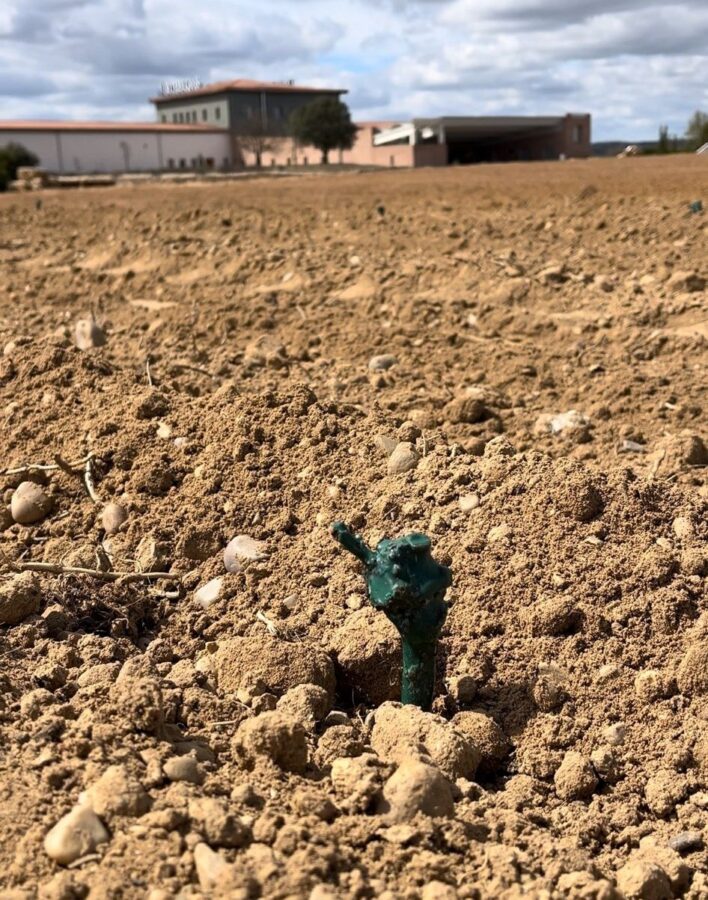
This spring has brought something fresh, new and very special. We have planted these varieties here. Our ambition is to continue growing around the winery and to enhance the wine tourism experience for those who visit us. That is why we are planting Albillo Mayor, Garnacha, Tempranillo, and Malbec vines, which will soon be visible during visits. They still need years to grow and produce wine, but these are the first steps of our favorite varieties, now even closer to Bodegas Nabal, and they will shape the future of Nabal wines.